When I started working as an auxiliary equipment supplier ten years ago, I thought my main job was just to sell reliable machines—think pumps, compressors, conveyor systems, and the small tools that keep factories, clinics, and even large retail distribution centers running smoothly. Back then, I’d meet with operations managers, listen to their most urgent complaints, and promise that my equipment would cut downtime, which everyone knows is a huge cost drain. What I didn’t realize at first was that the biggest savings my clients would gain didn’t just come from buying the right machine—it came from using that equipment smarter. Over the years, I’ve sat through hundreds of budget meetings, seen clients blow six-figure annual costs on avoidable repairs, energy waste, and unnecessary replacements, and turned those same pain points into actionable, proven strategies. Today, I want to share the cost-saving tactics I’ve witnessed work for our clients (and for us as a supplier, too) because using auxiliary equipment efficiently isn’t just good for your bottom line—it’s good for the planet, too. Auxiliary Equipments

Let’s start with the mistake I see most new clients make: buying the largest, highest-powered auxiliary equipment they “might need” instead of sizing it exactly for their actual workload. Early in my career, I had a client who ran a small food processing plant that made frozen pizza. They came to us needing a water pump for their cooling line, and they insisted on the biggest model we had on the floor—said they wanted “room to grow” even though their production was steady at 2,000 pizzas an hour, well under the pump’s 10,000-unit maximum. Six months later, their energy bill for that pump was $1,200 higher than our smaller, correctly sized model was for a nearby plant with the same production. I ran the numbers with their operations team and calculated that the oversized pump was wasting 35% of its energy just throttling excess flow to match their actual needs—something called “part-load inefficiency” that plagues 60% of auxiliary equipment installations, according to a 2022 study from the Association for Facilities Engineers (AFE). That $1,200 a month adds up to $14,400 a year, enough to cover two full service contracts for a properly sized pump. Sizing isn’t just about horsepower, either. For air compressors, which power everything from nail guns to packaging equipment, the wrong tank size can mean frequent on-and-off cycles that wear out the motor 2–3 times faster than normal. I’ve seen clients replace a compressor every two years because they bought a too-small tank to save a few hundred dollars upfront, when a $200 tank adjustment would have extended its life to 8+ years. The rule here is simple: get a load audit first. Most reputable auxiliary equipment suppliers (including ours) will do a free, no-obligation load assessment to map your actual hourly, daily, and peak needs before you buy anything. We do these audits with a basic data logger that tracks how much pressure, flow, or power your existing equipment uses over 7–10 days, and we can show you exactly what size will cut waste without sacrificing capacity. It’s the single biggest cost-saving step we push for new clients, and it’s saved our customers an average of 28% on auxiliary energy costs in their first year of use.
Next, preventive maintenance isn’t just a nice-to-have—it’s the most underrated cost-saving tactic for auxiliary equipment. I’ve had clients tell me, “I’ll fix it when it breaks,” and every time I cringe, because I know the cost of reactive maintenance is 3–5 times higher than preventive maintenance, per the U.S. Department of Energy (DOE). Let’s take our example from last year: a 30-location chain of auto repair shops called us after their vacuum systems (which are auxiliary equipment used to clean brake parts and pick up debris) started failing one after another. When we sent a technician to look, he found that the shops had skipped quarterly filter changes, so the vacuum motors were working 40% harder to pull air through clogged filters. The cost to replace just one motor was $1,800, and they had 12 failed units across 5 stores, plus 3 days of lost work because the shop couldn’t clean parts. If they’d done $40 worth of filter changes every three months, they would have saved over $20,000 in repairs and downtime. What’s more, poorly maintained equipment also uses more energy. A study from the International Energy Agency (IEA) found that a dirty air filter on a 10-horsepower compressor can increase energy use by 11%—that’s $800 a year in extra electricity for one machine. We’ve built our business around flexible, scheduled maintenance packages that are tailored to each client’s equipment, not a one-size-fits-all calendar. For a small bakery that runs mixers and proofing equipment 18 hours a day, we recommend monthly filter checks, while a large distribution center that uses conveyor systems 24/7 gets weekly inspections of belt tension and motor alignment. The key here is to track equipment performance over time, not just follow a timeline. Our technicians install small, low-cost sensors on all the equipment we service that alert us when a pump’s pressure drops, a compressor’s temperature rises, or a conveyor’s belt is showing early wear. That way, we can fix a loose bolt or a misaligned part before it turns into a $5,000 motor replacement. We once had a retail client who caught a bearing failure on their packaging conveyor 10 days before it would have broken down, saving them $12,000 in emergency repairs and a full day of delayed online orders. It’s worth noting that preventive maintenance doesn’t mean you have to pay for a service package from us—even if you handle it in-house, creating a simple log for each piece of auxiliary equipment (tracking when filters are changed, parts are lubricated, or belts are adjusted) can cut your long-term costs dramatically.
Another huge cost-saving area is optimizing auxiliary equipment for variable operation, or using controls that adjust performance to match actual demand. Most auxiliary equipment—compressors, pumps, even small HVAC fans—are “constant speed” by default, meaning they run at full power 24/7 even when only a fraction of that power is needed. For example, a warehouse that keeps its dock area cold only during loading shifts (8 hours a day) might have a constant-speed HVAC fan that runs full blast all 24 hours, wasting the equivalent of $3,000 a year in electricity. Adding a variable speed drive (VSD) to that fan, which slows it down when demand is low, cuts that energy use by 40–50%, per the DOE. We’ve retrofitted over 200 VSDs for clients in the last five years, and the average payback period for a VSD is just 18 months—meaning you save more than the cost of the upgrade in that time. It’s not just HVAC, either. A small manufacturing plant that runs a conveyor system only during production hours (10 hours a day) can add a timer control that shuts the system off entirely overnight and on weekends, instead of letting it idle. I had a woodworking client who was idling their dust collection system 24/7 because they thought it would take too long to start up in the morning. When we installed a soft start timer that cuts the idle time to 15 minutes before each shift, they saved $9,600 a year on electricity. The biggest thing I tell clients about controls: don’t overcomplicate it. For small, low-use equipment, a simple timer works. For larger systems, a basic programmable logic controller (PLC) can sync multiple pieces of auxiliary equipment—like making sure your air compressor only runs when your packaging line is active, instead of running separately all day. We’ve also had clients use smart sensors to adjust equipment based on actual occupancy—like a janitorial closet’s air purifier that turns on only when someone enters, instead of running all day. These small adjustments add up fast.
One more strategy that many clients overlook: right-sizing auxiliary equipment for flexibility, not just current needs, to avoid costly replacement down the line. Wait, earlier I talked about not buying oversized equipment, so let me clarify—this is about modular and versatile auxiliary equipment that can adapt as your business grows, instead of buying a whole new system when your needs change. For example, a startup coffee roaster I worked with three years ago bought a single, compact dust collector for their 500-pound batch roaster. Six months later, they added a second roaster and needed 30% more dust collection capacity. Instead of buying a $12,000 new, large collector, we added a small, modular unit that cost $3,000 and connected to their existing system. If they’d bought the oversized collector upfront, they would have paid $8,000 more than they needed to, and wasted space in their small facility. Modular equipment works for other areas, too: auxiliary water heaters that can be expanded by adding more tanks, pump systems that can be configured for different flow rates, and even small backup generators that can add units as your power needs grow, instead of replacing the whole system every few years. This is especially important for small and medium-sized businesses (SMBs), which make up 90% of our client base and often have volatile growth—they don’t want to tie up capital in equipment they’ll outgrow in a year. We design our auxiliary equipment lines to be modular for exactly this reason, and we offer trade-in credits if clients want to upgrade their units instead of buying new ones from scratch. A few years ago, a packaging client moved from local delivery to nationwide shipping, so they needed a larger conveyor system. They traded in their old conveyor for a credit on the new, modular system, saving $7,000 compared to buying all new.
Now, let’s talk about something that’s near and dear to me as a supplier: working with your auxiliary equipment provider to avoid hidden costs. A lot of clients see us as just a seller, but the best savings come when we act as partners, not vendors. For example, when a client is looking to buy new equipment, we sometimes point them to a used or rebuilt unit if it fits their needs, instead of a brand-new one. We test all our rebuilt auxiliary equipment (we have a certified tech team that tears down, cleans, and replaces any worn parts) and offer a 12-month warranty, so it’s as reliable as new, but 40–50% cheaper. Last year, a small print shop needed four compressors for their new digital presses. They were quoted $24,000 for new units, but we found four lightly used compressors from a closed plant, refurbished them for $9,000, and saved them $15,000. We also help clients navigate rebates and tax incentives that many people don’t know about. Utility companies and local governments often offer rebates for energy-efficient auxiliary equipment—some cover 20–30% of the cost of a new compressor or pump. We track all of these for our clients and help them fill out the paperwork, so they don’t leave money on the table. For example, a food processing client got a $5,000 rebate from their local power company when they installed our energy-efficient water heater, cutting their net cost by that amount. Another way we add value is by offering training for in-house staff. A lot of the cost waste we see comes from operators using equipment incorrectly—like running a pump at a higher pressure than needed, or overfilling a mixer, which causes extra strain and energy use. We offer free 2-hour training sessions for all our clients, teaching operators how to adjust equipment settings, perform basic maintenance, and spot early signs of wear. A recent study from the DOE found that well-trained operators can reduce auxiliary equipment energy use by 10–15% just by changing how they use the equipment, and that’s money you don’t have to spend on new parts or upgrades.
I want to be honest, too—there are pitfalls to these strategies, and I’ve seen clients get stuck when they try to cut costs too far. For example, buying a cheap, no-name auxiliary equipment unit to save a few hundred dollars. I had a retail client who bought a $500 air compressor from a big-box store instead of our $1,200 model, and it broke down every 8 months. Over three years, they spent $3,500 in repairs and replacements, plus $2,000 in lost work, which is way more than the cost of our reliable, 5-year warranty-backed unit. The old saying “you get what you pay for” applies here, but that doesn’t mean you have to overspend. Our job as suppliers is to match you with the equipment that fits your needs, not just sell you the most expensive one. Another pitfall: skipping maintenance to save money in the short term. I’ve had clients cancel their service contracts when times were tight, only to end up with a catastrophic failure that cost them more in a month than they saved in a year. Preventive maintenance is a long-term investment, not an expense.
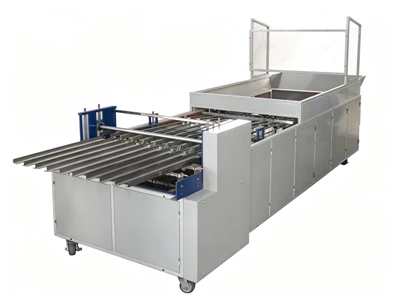
At the end of the day, the cost-saving strategies for auxiliary equipment aren’t rocket science—they’re about being intentional, not cutting corners, and working with a partner who understands your business. Whether you’re a small bakery looking to cut your utility bills, a manufacturing plant looking to reduce downtime, or a warehouse trying to optimize your logistics, the right steps start with knowing your actual needs, sizing equipment correctly, maintaining it regularly, and using controls to match demand. As an auxiliary equipment supplier, I’ve seen these strategies work hundreds of times, saving our clients tens of thousands of dollars every year, and in turn, helping them grow their businesses. If you’re looking to audit your auxiliary equipment use, find the right equipment for your needs, or chat about how to cut waste and boost savings, I’d welcome the chance to connect with you and your team to explore solutions tailored to your operations.
Plastic Extruder References
Association for Facilities Engineers. (2022). Part-Load Inefficiency in Auxiliary Equipment: A National Assessment.
U.S. Department of Energy. (2021). Preventive Maintenance vs. Reactive Maintenance for Industrial Equipment.
International Energy Agency. (2023). Energy Efficiency in Auxiliary Equipment for Commercial and Industrial Facilities.
U.S. Department of Energy. (2022). Variable Speed Drives: Cost-Benefit Analysis for Industrial Auxiliary Systems.
Zhejiang Sayeah Machinery Co., Ltd.
Zhejiang Sayeah Machinery Co., Ltd. is one of the most reliable manufacturers and suppliers of auxiliary equipments in China, also supports high quality customized service. Please feel free to buy CE approved auxiliary equipments from our factory. For price consultation, contact us.
Address: Wanquan District Industrial Zone,West Of China National Highway 104, Sunlou Village, Wanquan Town, Pingyang County, Zhejiang Province. China
E-mail: sales@sayeahmachinery.com
WebSite: https://www.sayeahthermoforming.com/
