When you walk through a factory that produces plastic bottles, gallon jugs, or even intricate automotive parts, chances are those items were made on an extrusion blowing machine. As someone who’s been supplying these machines for over a decade, I get asked this question constantly: “What’s the maximum pressure an extrusion blowing machine can withstand?” It’s not a one-size-fits-all answer—far from it. The capacity depends on a mix of machine design, material type, part size, and even the specific process being used. Let me break this down in plain, practical terms, because I’ve seen too many buyers either overengineer their machines or underbudget for what they actually need. Extrusion Blowing Machine
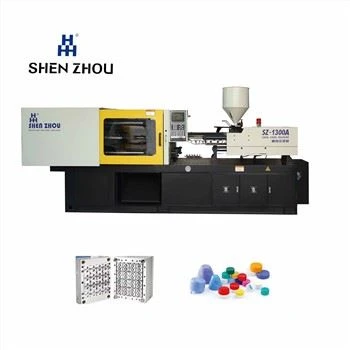
First, let’s ground this in how extrusion blowing works. At its core, the process combines two steps: extrusion, where plastic resin is melted into a continuous tube (called a parison), and blowing, where air pressure inflates that parison to match the shape of a mold. That air pressure is the pressure I’m talking about. Too little pressure, and the part will be thin in spots, have uneven walls, or fail stress tests. Too much, and you risk rupturing the parison, damaging the mold, or wearing out the machine’s components faster than they should.
Now, to the maximum pressure question. For most standard extrusion blowing machines used in consumer packaging—like 1-liter water bottles or 5-gallon water jugs—typical operating pressures range from 20 psi to 150 psi. But the maximum a machine can withstand isn’t just its operating pressure. It’s the peak pressure it can handle during the blowing cycle, plus any extra force from mold clamping, material expansion, and machine wear. For entry-level machines, that maximum is often around 200 psi. For mid-range machines, which handle heavier parts or more demanding materials, that number jumps to 350 psi. And for high-performance, industrial-grade machines designed for large parts (like automotive fuel tanks or industrial drums), the maximum can go as high as 500 psi.
But here’s the catch: that maximum pressure rating isn’t just a number on a spec sheet. It’s tied directly to how the machine is built. Let’s talk about the key components that dictate this. First, the blow pins and air delivery system. If you’re using thin-walled aluminum blow pins, they can only handle so much pressure before bending or leaking. We use hardened steel blow pins for our mid-to-high range machines, which can handle up to 550 psi, but that’s paired with air lines and regulators rated for the same pressure. Skimp on those, and even a machine rated for 300 psi will fail if you run it at 250 psi with cheap air fittings.
Next, the mold clamping system. When you introduce air into the parison, the pressure pushes outward, trying to force the mold halves apart. The clamping mechanism has to hold the mold tight with enough force to counter that. A common mistake new buyers make is only checking the blowing pressure, not the clamping force. For example, a 10-inch mold with a parison that inflates to full size at 100 psi needs 7,850 pounds of clamping force just to hold the mold closed (that’s calculated as pressure times area: 100 psi * (π * 5²) = 7,850 lbs). If your clamping system can only handle 7,000 lbs, you’ll get flash (excess plastic squeezed out between the mold halves) or the mold will shift, ruining parts. But if you want to run at 300 psi, you’ll need three times that clamping force—so the machine’s frame, clamping cylinders, and tie bars all have to be built to handle that extra load.
Then there’s the material you’re working with. Different plastics melt and expand differently, which affects how much pressure you need. HDPE (high-density polyethylene), the most common plastic for jugs and bottles, is pretty forgiving— it usually only needs 60 to 120 psi to form properly. But if you’re using a engineering plastic like PET (polyethylene terephthalate) for rigid containers, or a complex copolymer for automotive parts, you might need 200 psi or more to get uniform wall thickness. Some specialty materials, like multilayer coextrusion resins for food packaging, can require up to 400 psi because the layers need to bond and form without gaps. The material’s melt strength is key here: a resin with low melt strength will stretch too thin at high pressure, while one with high strength can handle more pressure without tearing.
Part size also plays a huge role. A small 500ml bottle only needs a small parison, so the pressure is concentrated in a tiny area. A 55-gallon industrial drum, by contrast, has a parison that’s several feet wide. Even if the pressure is the same 100 psi, the total force trying to push the mold apart is massive—so the machine’s maximum pressure has to account for that distributed load. We once had a customer who tried to use a small mid-range machine (rated for 350 psi) to make 30-gallon drums. He cranked the pressure to 300 psi, but the machine’s clamping system couldn’t handle the total force, and the frame cracked after a week. That’s why we always ask customers for their part size, material, and output requirements before recommending a machine’s pressure rating.
Another factor is cycle time. Faster cycle times mean you’re blowing the parison in less time, so the pressure has to build quicker, which can create peak pressures that are higher than steady-state operating pressure. If your machine has a fast valve actuation, that peak pressure might be 10 to 20 psi higher than your set operating pressure. We design our machines with pressure accumulators to smooth out those peaks, but if you skimp on that feature, you’ll hit the machine’s maximum pressure limit much sooner than expected.
Now, let’s talk about what happens if you exceed a machine’s maximum pressure. It’s not just a broken part— it can be dangerous, too. A ruptured parison can send shards of hot plastic flying, which is why proper machine guarding is non-negotiable. Internally, you’ll wear out seals faster, leak air, and put extra stress on the machine’s drive systems. Over time, running a machine above its maximum pressure will shorten its lifespan by years, even if nothing breaks immediately. We’ve seen a customer push a basic machine to 220 psi when it’s rated for 200 psi, and within six months, the blow cylinder seals were leaking so bad, production ground to a halt.
So, how do you find the right maximum pressure for your needs? Start with your end product. If you’re making small consumer bottles, 150 psi is more than enough, and a machine rated for 250 psi will work just fine. For larger industrial parts or engineering plastics, look for a machine with a 350 psi maximum rating. If you’re dealing with very large parts (over 100 gallons) or high-performance materials, you’ll want a machine rated for 450 to 500 psi. Don’t forget to work with your resin supplier—they can tell you the recommended blowing pressure for your specific material and part design.
As a supplier, we don’t just sell machines and walk away. We help our customers calculate their required pressure, check their clamping force, and make sure their setup is safe. We also offer upgrade options: if you start with a mid-range machine and later need higher pressure for a new product, we can upgrade your air system, blow pins, and clamping cylinders to match. That flexibility is important, because most businesses don’t know exactly what they’ll be making in five years.
One more thing to consider: maintenance. Even a machine with a 400 psi maximum pressure will perform poorly if you don’t maintain it. Check your air filters regularly—clogged filters can cause pressure spikes that exceed the machine’s rating. Replace worn seals and hoses, because even a small leak can make you run at higher pressure to compensate, putting extra stress on the system. We train all our customers on basic maintenance to keep their machines running at the right pressure, not over it.
At the end of the day, the maximum pressure an extrusion blowing machine can withstand isn’t just a number on a spec sheet. It’s a reflection of the machine’s build quality, its components, and how it’s used. Too many buyers focus only on the lowest price, but skimping on pressure rating will cost you more in downtime, repairs, and bad parts. If you’re planning to invest in an extrusion blowing machine, don’t just ask “what’s the maximum pressure?” Tell us what you’re making, what material you’re using, and how much you need to produce. We’ll help you find a machine that’s built to handle exactly what you need—no more, no less.

If you’re ready to explore your options or need help sizing a machine for your specific application, reach out to our team to discuss your extrusion blowing machine requirements.
Extrusion Blowing Machine References:
- Rosato, D. V., & Rosato, M. G. (2004). Extrusion Blow Molding Handbook. Hanser Gardner Publications.
- Giles, H. F., Wagner, J. R., & Waller, G. D. (2010). Extrusion: The Definitive Processing Guide and Handbook. William Andrew Publishing.
- Society of Plastics Engineers (SPE). (2018). Blow Molding Design Guide. Society of Plastics Engineers.
- Whelan, A. (2001). “Pressure Requirements in Extrusion Blow Molding.” Journal of Plastic Film & Sheeting, 17(3), 217-234.
- Manufacturing Engineering and Technology Handbook. (2015). Volume 7: Polymer Processing. American Society of Mechanical Engineers.
Shenzhou Machinery Co., Ltd.
As one of the most professional extrusion blowing machine manufacturers and suppliers in China, we’re featured by quality products and good price. Please feel free to buy advanced extrusion blowing machine made in China here from our factory. We also accept customized orders.
Address: Fenghuang Town, Zhangjiagang City, Jiangsu Province, P.R.China
E-mail: sale@shenzhoumac.com
WebSite: https://www.shen-zhoumachinery.com/
