Hey everyone, let’s cut to the chase—if you’re in charge of a data center, server room, or even a modern office with hidden cable runs, you’ve definitely wondered: how waterproof is that raised computer floor I’m staring at? As a raised access floor supplier, I get this question all the time, and honestly, it’s way more important than just a “yes or no” answer. Water damage in these spaces isn’t just a minor hassle; it can take out servers, wipe out critical data, and cost companies tens of thousands of dollars in downtime—so let’s break this down like we’re chatting over coffee, no boring jargon, and no fluff. Raised Computer Floor
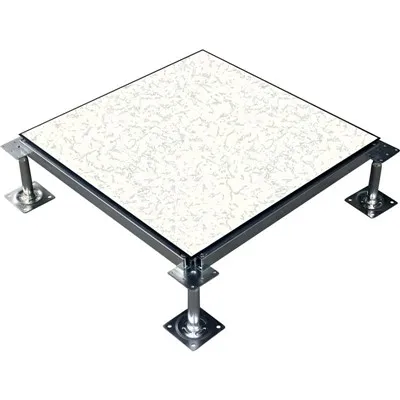
First off, let’s get one thing straight: raised computer floors (we call them raised access floors, by the way) aren’t meant to be submerged in a pool of water. Full stop. But that doesn’t mean they’ll turn to mush if a small spill happens, or if there’s a little condensation seeping up from the floor below. The water resistance depends on a bunch of factors—what the panels are made of, how they’re installed, and even what’s going on underneath the floor. Let’s start with the core stuff: the panels themselves.
Most standard raised floor panels are made of a few materials, and their water resistance varies hard. The most common ones are steel, concrete-wood core, and aluminum. Let’s be real—steel panels are basically tanks (pun intended). They’re coated with a thin layer of either epoxy or vinyl, right? That coating is the hero here. If a soda gets spilled on a steel panel, or if a pipe above leaks a little, that coating keeps the water from seeping into the steel underneath. I’ve seen steel panels sit under a small leak for 24 hours and still work fine once the area is dried out. The catch? The edges. Panels aren’t perfect, and where they meet each other, there’s a tiny gap. If water gets deep enough to pool between panels, that’s where it can creep in. Steel doesn’t rust super easily these days (thanks to that coating), but if the coating gets scratched, that’s a weak spot—water can get in there and cause corrosion over time, which weakens the panel.
Then there’s concrete-wood core panels. These are the ones you’ll see in a lot of offices with lighter loads, not so much heavy server rooms. The core is usually a mix of concrete and particle board, wrapped in a vinyl or fiberglass skin. Now, these are way less water-resistant than steel. If you spill a big cup of coffee on one, you can probably mop it up quick and be fine, but if that spill sits for even a few hours, it’ll seep through the edges and into the core. The wood part of the core will swell, warp, and start to break down. I once got a call from an office manager who had a pipe under the floor leak overnight—two concrete-wood core panels were so warped they couldn’t be lifted out without prying them. They had to replace three whole panels, and that cost way more than a quick fix would have. Aluminum panels are similar to steel, just lighter—they’re common in spaces where weight is an issue, like rooftop server rooms. Their coating is usually the same epoxy/vinyl, so they handle small spills well, but again, pooling water is the enemy.
Now, the part that most people forget: the subfloor and the understructure. A lot of raised floors are installed over a concrete slab, right? That slab might have some vapor barrier or not. If it doesn’t, moisture can seep up from the ground and get trapped between the raised floor and the subfloor. That’s not just a water problem—that’s a humidity problem, too. Even if you never spill a drop, constant low-level moisture from the subfloor can eat at panel edges or corrode the understructure (the metal frames and pedestals that hold the floor up). We always recommend that our clients install a vapor barrier on the subfloor before putting the panels down, especially if their space is in a humid climate. It’s a small extra step, but it saves so much headache later.
Another big factor: how the floor is sealed or finished. Some clients want panels with integrated gaskets along the edges—those are thin rubber strips that fit between panels when you lock them in. These gaskets do a great job of blocking small amounts of water from seeping between panels. If you’re in a space where spills are common (like a server room near a break room, or a lab), gaskets are worth the extra cost. We also offer custom sealants for panel edges if a client has a specific high-moisture environment, like a data center near a coastal area where salt air and humidity are constant. That sealant forms a tight barrier that keeps water out even if the floor is exposed to high humidity for long periods.
Wait, let’s talk about what counts as “water exposure,” because not all water is the same. A 1-liter soda spill is different from a full-on pipe burst that floods the underfloor plenum. If there’s a pipe burst, that’s a way bigger issue—even the most water-resistant panels won’t hold up to being submerged for days. The plenum (the space under the raised floor where you run cables, wires, and cooling lines) is also a problem here. If water gets in there, it can damage cables, and even if you replace the panels, the cables might be ruined. We always recommend that clients install leak detection systems in the plenum—small sensors that alert you the second water is detected, so you can fix the problem before it turns into a disaster. I’ve seen clients avoid six-figure damage just because they had those sensors.
Let’s clear up a common myth, too: people think that because the floor is raised, it’s automatically waterproof, or that water will just drain out. Nope. The panels are solid, so water that pools on top has nowhere to go unless you mop it up. And if water gets under the floor, it can get trapped there because the panels are sealed. That’s why quick response is key. If you spill something, mop it up within 30 minutes—steel panels will be fine, concrete-wood core might just have a small stain, but if you leave it for an hour or more, you’re asking for trouble.
Now, let’s get real about use cases. If you’re running a standard data center with heavy server loads, steel panels are your best bet. They’re water-resistant enough for small spills, gaskets can be added for extra protection, and they can handle all the weight of servers and cooling equipment. If you’re in a small office with a few servers and occasional coffee spills, concrete-wood core is fine, but don’t leave big spills sitting around. Aluminum is perfect for lightweight applications, like a mobile server room or a temporary setup, since it’s easy to move and still handles small water exposure well.
What about cleaning the floor? A lot of people use harsh cleaning chemicals, right? I’ve had clients ask if bleach or other cleaners will break down the panel coating. Most of the time, no—steel and aluminum panel coatings are designed to handle regular cleaning. But concrete-wood core panels? Harsh chemicals can eat through the vinyl skin, leaving the core exposed to water. So if you have those, stick to mild soap and water. Also, don’t pressure wash the panels—way too much water can get forced into the edges, and that’s a quick way to ruin them.
Let’s talk about real examples from our own projects, because numbers and stories help. Last year, we did a big data center upgrade for a financial firm in Chicago. They had old concrete-wood core panels that had been there for 10 years, and there was a minor pipe leak under the floor. They didn’t notice it for 12 hours, and two panels warped so bad they couldn’t be removed without breaking. We replaced them, installed steel panels with edge gaskets, and added plenum leak sensors. Six months later, they had another small leak—this time they noticed in 20 minutes, mopped it up, and no panels were damaged. The difference was night and day. Another client, a small tech startup in Austin, went with concrete-wood core panels to save money. They spilled a whole gallon of soda on a panel during a team meeting, left it while they grabbed mops, and the core swelled so much the panel wouldn’t sit flat. They ended up having to replace one panel, which cost them about $500, plus the time to fix it. That’s a small example, but it adds up—avoiding those small mistakes would have saved them cash.
So, to answer the original question: what’s the water resistance of a raised computer floor? It’s not 100% waterproof, but it can be highly water-resistant if you pick the right panels, install them correctly, and take basic precautions. The key is matching the panels to your space, not assuming all raised floors are the same. If you’re in a high-moisture area or have space where spills are likely, go for steel panels with gaskets and plenum sensors. If you’re in a low-risk area, concrete-wood core works as long as you’re diligent about cleaning up spills.
Wait, I should also mention that over time, even the best panels will degrade a little. Scratches on steel panels can let water in, so it’s good to inspect the floor every few months for any damaged coating. If you see a scratch, touch it up with the epoxy coating we sell—super easy, just a little brush-on stuff, and it seals the weak spot.
Now, let’s get practical. If you’re not sure what kind of raised floor is right for your space, don’t guess. A lot of suppliers will just push the most expensive panels, but we take the time to look at your space, your risks, and your budget. We’ve worked with data centers, offices, labs, even temporary event spaces, and we can tell you exactly what level of water resistance you need. No upselling, no jargon, just straight answers.
If you’re dealing with a possible water issue right now—like you just had a spill, or you’re worried about leaks in your plenum—reach out. We can help you assess if your panels are damaged, what you need to fix it, and how to prevent problems down the line. We’re not just here to sell you a floor; we’re here to make sure your space is safe, your data is protected, and you don’t have to stress about water damage.

At the end of the day, the water resistance of a raised computer floor is what you make it. Pick the right components, install it well, and take basic care, and it’ll handle almost anything you throw at it (as long as it’s not a full flood). Don’t let water damage catch you off guard—most of the time, it’s avoidable with the right setup.
Office Flooring References:
- Raised Access Floor Industry Association. (2022). Water Resistance Guidelines for Data Center Flooring. RAIA Technical Bulletin 07-22.
- American Society of Heating, Refrigerating and Air-Conditioning Engineers (ASHRAE). (2021). Data Center Room Pressure and Moisture Control Standards. ASHRAE Data Center Standards Series.
- International Code Council (ICC). (2020). Chapter 10: Mechanical Systems and Water Intrusion Protection. International Building Code (IBC) for Commercial Spaces.
Fineco Tech Co., Ltd.
As one of the most professional raised computer floor manufacturers and suppliers in China, we’re featured by quality products and good service. Welcome to wholesale customized raised computer floor made in China here from our factory. If you have any enquiry about cooperation, please feel free to email us.
Address: Wuyue Square, Wujin District, Changzhou, Jiangsu, China
E-mail: info@finecotech.com
WebSite: https://www.finecoglobal.com/
