Hey everyone, it’s Mia from the hand painted wallpaper team—you know, the crew that spends hours hunched over wooden boards, mixing custom paint with small-batch pigments, and making every roll feel like a tiny piece of art you can hang on your walls. Lately, I’ve been getting so many DMs and emails that go something like: “Wait, this isn’t mass-produced vinyl, right? So do I need to store it like it’s a Picasso sketch or something?” Fair question! I actually had a customer last month who ordered three custom rolls for their new house and then texted me panicking because their garage got a leaky pipe, and they thought the rolls were ruined before they even hung them. Spoiler: they weren’t, but that scare got me thinking—how many people really know that hand painted wallpaper doesn’t play by the same storage rules as regular printed wallpaper? Let’s break this down, keep it real, no fancy jargon, and I’ll even throw in a few pro tips we’ve picked up after 10 years of messing with these rolls. Hand Painted Wallpaper

First off, let’s get one thing straight: hand painted wallpaper is not the same as the stuff you pick up at the big box store. Mass-produced wallpaper is printed on thin vinyl or non-woven rolls, glued with preservatives, made to sit in a warehouse for months without a second thought. Our stuff? Each roll is printed on 100% unbleached, acid-free cotton paper—trust me, that’s a big deal. Acid is the enemy of paper. Regular paper you print at home will yellow and crumble over time because of acid, and our hand painted paper is no different, especially when it’s stored long-term. Then there’s the paint: we use only water-based, artist-grade acrylics and gouache, no cheap latex that’ll flake off if it’s too dry. That’s why storage conditions matter way more for our rolls than the mass-produced kind.
Now, let’s talk about the three big storage culprits that wreck hand painted wallpaper, and how to avoid them. First up: moisture. I know, I know—no one thinks about their storage space until it’s raining or their basement is a swamp, but moisture is public enemy number one here. Our cotton paper absorbs water like a sponge, right? If it’s humid or gets damp, two things happen: first, the paper warps and develops those weird wavy edges you can’t iron out (we’ve tried—ironing hand painted wallpaper is a disaster waiting to happen, don’t ask). Second, the paint can start to bleed. Water-based paint mixed with pigment, if it sits in damp conditions, will seep into the paper fibers and smudge the design. That customer I mentioned earlier? Their garage was 70% humidity, and the outer edge of the two rolls that were leaning against the wall had faint water stains, but since they were stored vertically (not flat) and only got a tiny bit of water, we were able to cut off the damaged edges and they turned out fine. Pro tip from our install team: if you have to store extra rolls before hanging, stick them in a cool, dry closet, not the basement or garage, and keep a dehumidifier running if your space is normally damp. We also throw in a pack of silica gel packets with every order—those are for your shoe closet? Nah, leave some in the wallpaper box too, they soak up extra moisture.
Second big one: extreme temperatures. Let’s be real, most people don’t store wallpaper in a climate-controlled vault, but you shouldn’t stick it in a spot that gets way too hot or way too cold. Why? The paper fibers expand and contract with temperature changes, and if that happens too fast or too often, the paper will weaken. For example, if you leave a roll in your car in the middle of July (don’t laugh, I’ve heard that from a customer too—they forgot it in their backseat for two days), the heat makes the acrylic paint brittle. Not only will it crack and flake when you unroll it, but the paper might get so dry that it tears when you try to hang it. On the flip side, if you store it in a super cold, unheated space in the middle of winter, the paper can become stiff and crack too. We’re talking about room temperature, basically—between 60 and 75 degrees Fahrenheit (15 to 24 Celsius) is sweet spot. If you have to store it for more than a couple weeks, avoid attics (they get way too hot in summer) or unheated sheds. We once had a customer in Minnesota store their rolls in their backyard shed over a harsh winter, and when they unrolled them, half the designs had cracks like old pottery—total bummer, and totally preventable.
Third, and this is one a lot of people miss: how you lay the rolls down. Regular printed wallpaper is fine stacked flat, but hand painted wallpaper is not. Wait, why? Let’s go back to that acid-free cotton paper—if you stack two rolls flat on top of each other for weeks or months, the bottom roll will develop creases that never go away. Even worse, if the paint is still slightly curing (we tell customers to let rolls sit for 24 hours after opening to let the paint set before hanging), a heavy roll on top will cause the paint to transfer onto the back of the upper roll. I can’t tell you how many times we’ve had to replace a roll because a customer stacked them on top of each other in their garage, and now there’s a faint duplicate of the design on the back of the top roll. So what’s the right way? Stand them vertically, like you would a stack of wine bottles, propped up at a slight angle so they don’t lean too hard on each other. Don’t lean them against a wall where the edges can get smooshed, either—use a sturdy shelf or a wallpaper rack if you have one. Our packaging has a little notch at the top for this exact reason, so you can slide a piece of cardboard through and hang the roll temporarily if you need to while you wait for your install date.
Wait, but what if you need to store wallpaper long-term, like more than a few months? Maybe you ordered a guest room design and aren’t renovating for a year, or you have extra rolls for touch-ups (pro tip: always keep extra rolls, the dye lot can be different). What then? We’ve done this for our own showroom inventory, and for customers who needed extra rolls stored while their home was under construction. First, don’t open the original box—leave it sealed. Our boxes are acid-free, and we line them with tissue paper that’s treated to resist moisture and dust. Then, find a spot that’s dark, too—UV light is another enemy, even if it’s just sitting in storage. If your storage space gets a lot of sunlight through a window, cover the box with a dark sheet or move it to a closet, because UV rays can fade the hand painted design over time. I know it’s not going to be hanging on a wall, but UV rays are harsh no matter what, and you don’t want to pull out a roll a year later only to realize the blue flowers are now a pale gray.
Let me also bust a few myths here, because I hear them all the time. Myth #1: If it’s hand painted, you can fix any damage easily. No, not really—especially water damage that seeps into the paper. Once the fibers swell, they don’t go back to normal, and cutting off a corner or edge is only fixable if the damage is small. Myth #2: You need special plastic covers to wrap the rolls. Nah, plastic traps moisture, which is worse than no cover at all. Stick to the original packaging, or a loose cotton sheet if you need extra protection from dust. Myth #3: You can store it anywhere, it’s just paper. Trust me, we’ve been doing this long enough—small mistakes in storage lead to big headaches when you’re ready to hang.
At the end of the day, hand painted wallpaper is a labor of love, right? We spend hours painting each roll, making sure every brush stroke is intentional, mixing pigments to match exactly what you ordered. So storing it the right way is just another way to respect that work—you’re not just storing paper, you’re storing a piece of art that’s going to make your home feel warm and unique. I always tell customers, if you have questions about storage, or even about hanging the rolls, just reach out. We don’t do automated responses, it’s just me and the team replying to your DMs or emails. If you’re in the middle of a renovation and need to order custom hand painted wallpaper, we can walk you through everything from design to delivery to storage tips, so you don’t have that panicky text like my last customer. We’ve seen every mistake, so we can help you avoid them.
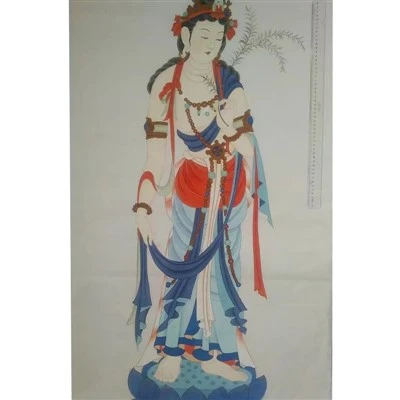
If you’re ready to make your space stand out with something that’s not generic, hit us up to chat about your project. Whether it’s a small accent wall or an entire home, we’re here to make sure the process is easy, even the storage part. Don’t overcomplicate it—just keep it dry, cool, standing up, and out of direct sunlight, and your hand painted rolls will be good as new whenever you’re ready to hang them.
Hand-drawn Figure Drawings REFERENCES
- American Society for Testing and Materials. Standard Specification for Acid-Free Paper and Board for Use in Archives, Libraries, and Museums. ASTM International, 2021.
- The Getty Conservation Institute. Care and Handling of Art on Paper. Getty Publications, 2018.
- Wallpaper Manufacturers Association. Best Practices for Storage of Decorative Wall Coverings. WMA Technical Bulletin, 2020.
- National Paint and Coatings Association. Water-Based Acrylic Paint Stability in Humid Conditions. NPCA Research Report, 2019.
Rudong Zhimu Hand Painting Studio
As one of the most professional hand painted wallpaper manufacturers and suppliers in China, we also support customized service. Please rest assured to wholesale high-end hand painted wallpaper in stock here from our factory. If you have any enquiry about quotation, please feel free to email us.
Address: No.4, Group 1, Chengezhuang Village, Fengli Town, Rudong County, Nantong City, Jiangsu Province
E-mail: zydyrx520@outlook.com
WebSite: https://www.zhimupainting.com/
