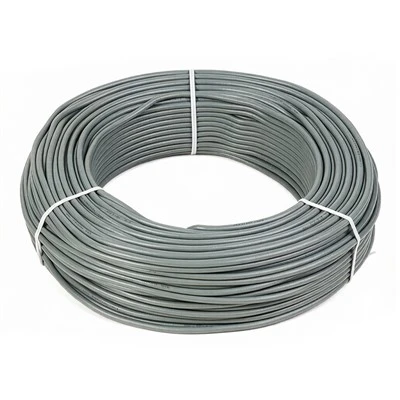
Compensating cables play a crucial role in various industrial and electrical applications, especially when it comes to accurately transmitting signals from temperature sensors such as thermocouples. One important electrical property associated with these cables is inductance. In this blog post, as a supplier of compensating cables, I will delve into what the inductance of compensating cables is, its significance, factors influencing it, and how to manage it in practical applications. Compensating Cables
Understanding Inductance
Inductance is an electrical property that describes a circuit’s ability to store energy in a magnetic field when an electric current flows through it. It is measured in henries (H). When current passes through a conductor, a magnetic field is generated around it. If the current changes, the magnetic field also changes, and this changing magnetic field induces an electromotive force (EMF) in the conductor itself and in nearby conductors according to Faraday’s law of electromagnetic induction.
In the context of compensating cables, inductance can have both positive and negative impacts. On one hand, in some applications where electromagnetic interference (EMI) needs to be managed, the inductance of the cable can be used to create a low – pass filter effect, reducing high – frequency noise. On the other hand, excessive inductance in compensating cables can cause signal distortion, particularly in high – speed or high – frequency signal transmission.
Significance of Inductance in Compensating Cables
Compensating cables are primarily used to extend the signal from thermocouples to temperature controllers or data acquisition systems. The accuracy of temperature measurement depends on the faithful transmission of the thermocouple’s low – level voltage signal. Inductance can affect this transmission in several ways.
Firstly, inductance can cause a phase shift in the signal. In AC circuits or when there are rapid fluctuations in the thermocouple signal, the phase shift introduced by the cable’s inductance can lead to inaccurate temperature readings. This is because the temperature – measuring equipment may expect the signal to arrive at a certain phase, and any deviation can result in errors in the calculated temperature.
Secondly, inductance can interact with the cable’s capacitance and resistance to form a complex impedance. This impedance can vary with frequency, causing different frequencies in the signal to be attenuated differently. As a result, the signal may be distorted, and high – frequency components, which could carry important information about rapid temperature changes, may be lost.
Factors Influencing the Inductance of Compensating Cables
Cable Geometry
The physical shape and dimensions of the compensating cable have a significant impact on its inductance. For example, the distance between the conductors in a multi – conductor cable affects the magnetic coupling between them. If the conductors are close together, the magnetic fields generated by the currents in each conductor can interact more strongly, increasing the overall inductance.
The length of the cable is another important factor. Generally, the longer the cable, the higher the inductance. This is because a longer conductor has a larger magnetic field associated with it, and the cumulative effect of the induced EMF over the length of the cable results in a greater inductance value.
Conductor Material
The magnetic properties of the conductor material can influence the inductance of the cable. Materials with high magnetic permeability, such as ferromagnetic materials, can enhance the magnetic field around the conductor, leading to an increase in inductance. Compensating cables are typically made of materials with specific electrical properties to match the thermocouple they are connected to, and the choice of conductor material can be a balance between achieving the right electrical characteristics and managing inductance.
Cable Construction
The way the cable is constructed also plays a role in determining its inductance. Twisted – pair cables, for example, are commonly used in compensating cables. The twisting of the conductors reduces the magnetic coupling between adjacent loops, thereby reducing the inductance compared to a non – twisted cable. Shielded cables, which have a conductive shield around the inner conductors, can also affect inductance. The shield can act as a return path for the magnetic field, altering the overall magnetic field distribution and thus the inductance.
Measuring the Inductance of Compensating Cables
Measuring the inductance of compensating cables requires specialized equipment. One common method is to use an LCR meter (Inductance – Capacitance – Resistance meter). An LCR meter applies an AC signal to the cable and measures the impedance components, including inductance, capacitance, and resistance, at a specific frequency.
To get accurate measurements, it is important to follow proper measurement procedures. The cable should be in a relaxed state, and the measurement leads should be properly connected to avoid introducing additional inductance or capacitance. Multiple measurements may be taken at different frequencies to understand how the inductance varies with frequency, which is particularly important for compensating cables used in applications with a wide range of signal frequencies.
Managing Inductance in Practical Applications
As a supplier of compensating cables, we understand the importance of managing inductance in real – world applications. One way to minimize the impact of inductance is to choose the right cable type. For applications where signal distortion due to inductance is a concern, cables with low inductance, such as well – constructed twisted – pair cables, should be selected.
In addition, impedance matching is crucial. The impedance of the compensating cable should be matched to the impedance of the thermocouple and the connected measuring equipment. This ensures efficient signal transfer and reduces reflection and distortion caused by impedance mismatches.
Proper cable installation is also essential. Cables should be routed away from sources of electromagnetic interference, such as motors and transformers. Bending the cables too tightly or installing them in close proximity to metal objects can also affect the inductance, so care should be taken during the installation process.
Conclusion
In conclusion, the inductance of compensating cables is an important electrical property that can significantly affect the performance of temperature measurement systems. It is influenced by factors such as cable geometry, conductor material, and cable construction. Understanding the role of inductance and how to manage it is crucial for ensuring accurate and reliable temperature measurements.
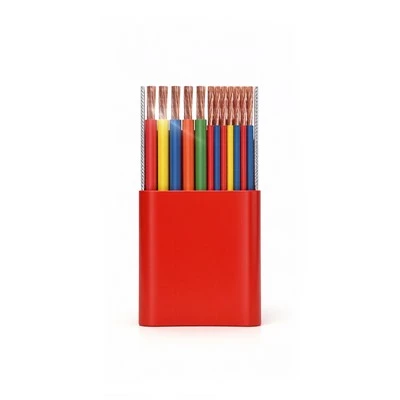
As a leading supplier of compensating cables, we are committed to providing high – quality products with well – controlled inductance characteristics. Our expert team can assist you in selecting the right compensating cable for your specific application, taking into account factors such as inductance, cable length, and environmental conditions.
Control Cables If you are in the market for compensating cables and want to discuss your requirements in detail, we encourage you to reach out to us. Our knowledgeable sales representatives are ready to answer your questions and help you find the best solution for your needs.
References
- "Electrical Engineering Handbook", edited by Richard C. Dorf.
- "Thermocouple Theory and Application" by John E. Gooch and J. G. Wakeling.
- Industry standards and specifications related to compensating cables and electrical properties.
Anhui Yuantong Cable Co., Ltd.
As one of the most professional compensating cables manufacturers and suppliers in China, we offer a wide range of cables with superior quality. Please feel free to wholesale bulk customized compensating cables from our factory. Also, pricelist is available.
Address: Yongfeng Industrial Park, Tianchang City, Anhui Province
E-mail: ahytcable@126.com
WebSite: https://www.yuantongcable.net/
