Let’s cut to the chase: when you think of a power grid, you probably picture massive transmission lines crisscrossing the country or towering wind turbines spinning on a hill. But here’s the thing—none of that heavy infrastructure does any good without low voltage distribution (LVD) equipment keeping the lights on in your office, your kid’s school, or your neighborhood café. As someone who’s been supplying LVD gear for over a decade, I’ve seen firsthand how overlooked these unsung heroes are, even though they’re the glue holding the entire grid together. Low Voltage Distribution Equipment

First, let’s define what we’re talking about here. Low voltage distribution equipment is basically the stuff that steps down the high-voltage power zipping through transmission lines to the safe, usable level (usually 100V to 1,000V, depending on where you are) that powers everyday devices. Think circuit breakers, distribution boards, switchgear, cable management systems, and those tiny but critical residual current devices (RCDs) that flip off when there’s a fault. Yeah, that little button you test every few months? That’s LVD gear, and it’s the reason you don’t get shocked when you plug in your toaster.
Why does this matter so much for the grid? Let’s start with reliability. A high-voltage transmission line might carry power hundreds of miles, but it’s the local distribution network that delivers it to end users, and that network lives or dies by its LVD components. Last year, I got a call from a small manufacturing client in Ohio who had a transformer blow in their distribution cabinet—turns out a faulty circuit breaker inside didn’t trip when there was a surge, frying their assembly line. The downtime cost them $120,000 in a single shift. If they’d had better, properly maintained LVD equipment, that surge would’ve been contained before it reached their machinery. That’s not an isolated incident, either. The U.S. Department of Energy reports that 70% of grid outages in commercial and residential settings stem from distribution system failures, and most of those are tied to low voltage gear.
Wait, so why can’t transmission systems handle that? Because transmission is about moving power efficiently over long distances—high voltage means less energy lost as heat, but it’s way too dangerous to use directly. The grid’s “middle mile” isn’t just a transition; it’s a safety buffer and a control hub. LVD equipment acts like a traffic cop, directing power to where it’s needed, and a bouncer, kicking out faults before they spread. Without that, a single glitch in a transmission line could take out entire neighborhoods, not just a small area.
Then there’s safety—this is non-negotiable. I’ve lost count of how many times I’ve had engineers tell me they “cut corners” on cheap LVD gear to save a few bucks. Let’s be real: a $10 circuit breaker vs. a $20 one? The cheap one might look the same, but it doesn’t have the arc-fault protection required by modern wiring codes. Arc faults are when electricity jumps between conductors, and they cause 30,000 fires a year in the U.S. alone, per the National Fire Protection Association. Our equipment undergoes rigorous testing to stop those arcs before they ignite, which isn’t just a sales point—it’s a life saver. A grid is only as safe as its lowest voltage components, and skimping here is a risk no one should take.
Now, let’s talk about the shift to renewable energy, because that’s changing everything right now. Ten years ago, the grid was pretty straightforward: power from a coal plant, one-way to your outlet. Today? We’ve got solar panels on rooftops, wind turbines in backyards, electric vehicle (EV) chargers in every parking lot—all feeding power back into the grid, and all connecting via low voltage equipment. That’s a huge deal. Traditional LVD gear was built for one-way power flow, but now we need two-way systems that can handle energy from solar panels (which often generate power at the same time people are at work, so it needs to go back to the grid) and EVs charging and discharging. As an LVD supplier, we’ve had to adapt fast—last year, 40% of our orders were for bidirectional distribution boards and smart switchgear for commercial solar projects. If we (and other suppliers) didn’t step up, those renewable energy projects would be dead in the water. You can’t connect a 50kW solar array to a residential grid without a proper distribution cabinet that can handle the reverse power flow. It’s like trying to pour water into a garden hose that’s only meant to carry it out—you’ll get a burst.
Another big one: flexibility and scalability. Businesses don’t stay the same size, and neither do households. When a café adds a commercial espresso machine or a factory expands its production line, they need to upgrade their electrical system fast. LVD equipment is modular, which means you don’t have to rip out the whole cabinet to add a new circuit. A client of ours in Texas recently doubled their office space, and we were able to install a few extra distribution modules in a single day—no downtime, no full rewiring. For the grid, that scalability is key as energy needs change. Governments are mandating net-zero goals, so more people will be adding solar, EVs, and heat pumps. LVD equipment has to grow with them, and if it’s not designed to be flexible, the grid will get bogged down.
Wait, let’s not forget about cost. People often think transmission lines are the big-ticket item, but LVD infrastructure makes up 60% of the total grid investment, per the International Energy Agency. That’s because every building, every street, every corner needs distribution gear. Cutting costs here might seem smart short-term, but long-term outages and repairs are way more expensive. I had a client in Florida who installed cheap RCDs a few years ago; last hurricane season, 80% of them failed when the power grid went down, leading to dozens of houses losing power for three days. Replacing those RCDs and compensating the client for their loss ended up costing three times what they saved initially. Good LVD equipment is an investment, not an expense.
Now, let’s address a common myth: “Smart grids don’t need old-school LVD gear.” Yes, smart meters and grid monitoring systems are huge, but they’re useless without the physical LVD components that connect to them. A smart switch doesn’t do anything if the circuit breaker it’s attached to is faulty. Smart grids rely on LVD equipment to send real-time data on power usage, faults, and energy flow—so it’s not just about breaking circuits, it’s about communication. Our latest products have built-in IoT sensors that send alerts when a circuit is overloaded or a breaker is about to fail, so utilities can fix issues before they cause outages. That’s how we’re making the grid smarter, not just more connected.
As someone who’s been in this game, I’ve seen how the grid evolves, and LVD equipment is at the center of every change. From handling renewable energy to keeping people safe to preventing costly downtime, it’s not just a “peripheral” part of the grid—it’s the foundation. If the foundation is weak, the whole thing collapses.
Here’s the thing: if you’re a utility company, a commercial building manager, or even a homeowner who’s planning a solar installation, your LVD equipment isn’t something to ignore. It’s what keeps your power reliable, safe, and adaptable to the future. We don’t just supply equipment—we help design systems that fit your needs, whether you’re a small café adding an EV charger or a big factory expanding its operations.
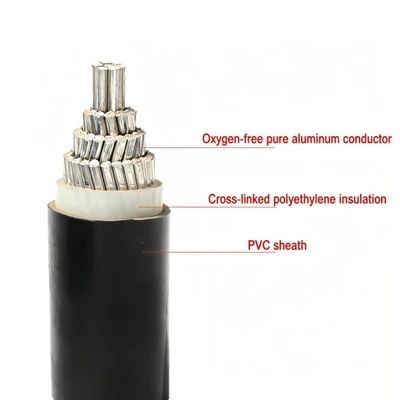
If you’re looking to upgrade your distribution gear, troubleshoot a faulty system, or just want to chat about how to make your grid more efficient, reach out to us for a procurement consultation. We’re here to help you get the right gear, the right installation, and the right support to keep your power flowing. We don’t do one-size-fits-all, because your grid is unique, and neither is our service.
Power Cable References
- U.S. Department of Energy. (2022). Distribution System Reliability and Outage Statistics.
- National Fire Protection Association. (2023). Electrical Fire Incidents in Residential Buildings.
- International Energy Agency. (2022). Low Voltage Distribution Infrastructure Investment in Global Grids.
- National Electrical Manufacturers Association. (2023). Smart Low Voltage Equipment for Modern Grids.
- Occupational Safety and Health Administration. (2022). Electrical Safety Standards for Circuit Protection.
Hebei Fengbo Electrical Equipment Co., Ltd.
Address: No.100 meters south, East Ring Road & Wei’er Road intersection, Huang’erying East Village, Jiajiakou Town, Ningjin County, Xingtai City, Hebei Province, China
E-mail: fonbocable@gmail.com
WebSite: https://www.fonbocable.com/
