Hey everyone, thanks for stopping by my ACB blog—quick heads up, I’m the guy who’s been supplying air circuit breakers (that’s ACBs, for short) for nearly a decade, and I still get questions that blow my mind sometimes. The one that pops up at least once a week? “What’s the deal with different breaking times for ACBs, anyway?” A lot of folks treat “breaking time” like just another spec on a sheet, but skip that part, and you could end up with a breaker that either doesn’t protect your gear, or trips way too often for no good reason. Let’s break this down straight, no fluff, just what actually matters. Air Circuit Breakers
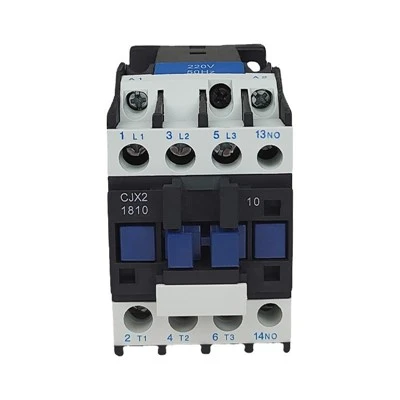
First, let’s get the basics right so we’re all on the same page. What’s an ACB’s breaking time? Put simply, it’s how fast the breaker snips the power when a fault hits—like a short circuit that’s spiking 10x your normal current, or an overload that’s gonna fry your motors or transformers. The entire process has two parts, too: the time it takes the breaker to sense there’s a problem (that’s the “trip delay” or “pickup time”), and the actual time it takes the moving parts to separate the contacts and arc the circuit (called “arcing time”). Add those two together, and that’s your total breaking time.
Here’s the thing: not all faults are the same. If you’ve got a tiny office with some servers, a slow breaker might be fine, but if you’re running a big factory with heavy machinery or a data center with $10k servers, that slow breaker could turn a small fault into a million-dollar disaster. Let’s walk through the main breaking time categories we stock, because that’s what my customers actually ask about.
First up: Standard Breaking Time (let’s call this SBT, for short). Most of the ACBs we sell fall into this range—usually 50 to 100 milliseconds (ms) total. Wait, 100 ms is a tenth of a second? That’s fast, right? Yeah, for most low-risk applications, it’s more than enough. What’s “low-risk”? Think small commercial spaces, retail stores, or light industrial stuff like office equipment, lighting circuits, or small conveyor belts that can handle a quick but not super-snappy trip. I’ll be honest—this is the workhorse of our product line. If someone’s building a new strip mall and they just need reliable protection without overspending, SBT is what we recommend. But here’s the catch: SBT breaks a little slower, so it’s not for when a fault could spread fast. For example, if a wire frays near a gas line in a restaurant, that extra 50 ms might be enough time for heat to ignite something. Or if you’ve got sensitive electronics that can’t handle even a tiny voltage blip, SBT might cause enough current surge to damage them. A lot of first-time buyers skip this part, thinking “faster is better,” but SBT’s sweet spot is for when downtime isn’t a dealbreaker. A café can handle a 10-minute power flicker, but a warehouse with frozen inventory can’t—so they need something different.
Next: Fast Breaking Time (FBT, 20 to 50 ms). This is where most of my industrial customers go. Faster than SBT, and designed for medium to high-risk spots. Let’s say you’ve got a mid-sized manufacturing plant with big motors, or a retail space with a central HVAC system that’s tied to multiple cooling units. Why does 20 ms matter here? Let’s talk about let-through energy—wait, that’s the amount of current that gets through the breaker before it trips, right? The faster the breaker, the less let-through energy hits your equipment. Motors, for example, can handle overloads, but a short circuit in a motor winding will generate heat so fast that even a split-second delay can warp the insulation, leading to a total motor failure in a year or two. I had a customer last year who tried to save a few bucks by going with SBT for his 100HP conveyor motors. Within 6 months, he had three motors burn out because the SBT let through 2x more current than the FBT would have. He came back and bought our FBT models, and hasn’t had an issue since. FBT is also perfect for situations where you need selective tripping—like a chain of breakers where you only want the faulty one to trip, not the whole system. If your main breaker is FBT, and the branch breaker is SBT, wait no—wait, it’s the other way around: the closer to the fault, the faster the breaker. So if you have a feeder breaker that’s FBT, and a branch ACB that’s SBT, the branch will trip first if there’s a fault there, keeping the feeder and the rest of the plant online. That’s the kind of thing that saves businesses tens of thousands in downtime. The downside? FBT is a little pricier than SBT, and it’s overkill for small setups. I once tried to sell FBT to a guy who was wiring his garage workshop—he laughed and said his table saw could handle a 50 ms delay, and he was right. No need to waste money on something you don’t need.
Then there’s Ultra-Fast Breaking Time (UFBT, under 20 ms). These are the specialized ones, for when speed isn’t just a nice-to-have—it’s the only thing that works. Where do we use these? Data centers, chemical plants, substations, or any place where a fault could cause explosions, fires, or catastrophic loss. Let’s take a data center: servers are super sensitive to voltage drops. If a breaker takes 50 ms to trip, that’s enough time for a power surge to crash a rack of servers, leading to lost data and thousands in revenue. A UFBT breaker trips in 15 ms or less—so fast that the current surge barely has time to register, let alone damage the gear. Chemical plants? A short circuit near a flammable gas line—10 ms could mean the difference between a small trip and a major explosion. I had a customer in the oil and gas industry who needed these for their pumping stations; they told me their old breakers took 30 ms, and once a spark from a delayed trip ignited a small leak. After switching to UFBT, they haven’t had a single safety incident related to breaker speed. The other use case for UFBT is generator systems. When the grid goes down, generators kick in—if the breaker between the grid and generator is slow, you can get a backfeed that damages the generator or the grid. UFBT cuts that off before it happens. Now, the downside here? UFBT is the most expensive of the three, and it’s not compatible with all systems. You can’t just swap a SBT for UFBT without checking your equipment specs, because the faster trip can cause nuisance tripping if your system doesn’t support it. That’s why my team always does a quick check of your setup before we recommend anything—we don’t want you buying something that doesn’t work for you.
Wait, let’s clear up a common misconception here. A lot of people think “breaking time” is the only spec that matters, but it’s tied to something called rated breaking capacity. That’s the maximum current the breaker can safely interrupt. So a breaker with a high breaking capacity can have different breaking times, but you have to match the time to the capacity. For example, if you have a 100kA fault current, you need a breaker with enough breaking capacity and the right time to handle it. I’ve seen guys buy a fast breaker that can’t handle the fault current—so when a big short hits, it doesn’t trip, it explodes. That’s the last thing anyone wants. So it’s not just about speed—it’s about matching speed to your fault level and your equipment’s needs.
Another thing to think about: application-specific needs. Let’s break down a few common scenarios so you can see what’s right for you. If you’re a small business owner with a 5,000 sq ft office, lighting, a few desktops, and a small server closet—go with standard breaking time. It’s reliable, cheap, and does exactly what you need. If you’re a medium factory with multiple production lines, big motors, and occasional heavy use—fast breaking time is your go-to. It’ll protect your equipment without wasting money on ultra-fast. If you’re a data center, chemical plant, or critical infrastructure where downtime isn’t an option—ultra-fast is non-negotiable.
Now, let’s talk about what I actually recommend to customers. First, don’t look at breaking time in a vacuum. Ask yourself two questions: 1) What’s the cost of downtime if a fault happens? 2) What’s the sensitivity of my equipment? If downtime would cost you $10k an hour, that’s a sign to spring for faster. If your equipment is sensitive (like servers, medical devices, or precision machinery), faster is better. If downtime is cheap and your gear is rugged, stick with standard.
I’ve been doing this long enough to know that a lot of buyers get swayed by the cheapest option, but that’s a mistake. A $200 SBT breaker that doesn’t protect your $10k server is a bad deal. A $500 FBT breaker that saves you $20k in motor repairs is a good deal. And don’t forget—we’re here to help. I don’t just sell breakers; my team will walk you through your setup, tell you exactly what you need, no pressure. If you’re not sure which breaking time is right for your air circuit breakers, just reach out. We can answer any questions, check your system specs, and make sure you get the right product.
Wait, let’s also touch on why breaking time varies so much. It comes down to the design of the breaker. Standard breakers have a slower actuation mechanism—like a spring that takes a little longer to release. Fast breakers have a more responsive trigger, and ultra-fast ones use magnetic actuators that trip in milliseconds, no lag. The arc chute design matters too—faster breakers can extinguish the arc quicker, so the arcing time is shorter. That’s why UFBT breakers are more expensive: they use better materials, more advanced actuators, and stricter quality controls. No cutting corners there.
Another common question: does breaking time affect the lifespan of the breaker? Yeah, a little. Faster breakers have to handle higher current for less time, so the contacts don’t wear as much as a slower breaker that’s holding current longer. Wait, no—wait, actually, standard breakers trip slower, so they have more time to transfer current to the arc, which can wear the contacts more. So fast and ultra-fast breakers actually last longer in high fault scenarios, because the damage is limited to a shorter time. That’s a bonus, if you ask me.
Let me wrap this up so it’s not too confusing. The main differences between ACBs with different breaking times are:
- Speed: SBT = 50-100ms, FBT = 20-50ms, UFBT = <20ms.
- Use case: SBT for low-risk, low-cost setups; FBT for medium industrial; UFBT for critical, high-risk sites.
- Cost: SBT < FBT < UFBT.
- Protection level: Faster = less let-through energy, better equipment protection.
At the end of the day, breaking time isn’t just a spec number—it’s about keeping your business running, your equipment safe, and your people protected. If you’re in the market for air circuit breakers, or you have questions about which breaking time fits your needs, don’t hesitate to get in touch. We’re here to help you make the right choice, not just sell you the cheapest or fastest option. Just reach out to our team for a custom consultation.
Distribution Box References
IEC 60947-2: Low-voltage switchgear and controlgear – Part 2: Circuit breakers
ANSI C37.16: Standard for Low-Voltage AC Power Circuit Breakers Used in Enclosures
National Electrical Code (NEC) Article 240: Overcurrent Protection
Wenzhou Lanen Electrical Co., Ltd.
Wenzhou Lanen Electrical Co., Ltd. is one of the most professional air circuit breakers manufacturers and suppliers in China, also supports customized service with low price. Please feel free to buy CE approved air circuit breakers made in China here from our factory. Contact us for more discount information.
Address: Zhiguang Liushi Town Yueqing City Wenzhou City Zhejiang Province
E-mail: lanen@luyele.cn
WebSite: https://www.lanenelectrical.com/
