As the founder and lead engineer of an atomic physics instruments supply company that’s been operating for 12 years, I’ve had hundreds of conversations with researchers—from grad students setting up their first lab systems to tenured professors chasing precision measurements that could redefine our understanding of fundamental forces. One question that comes up more than any other? “How do I get better sensitivity out of my atomic physics setup?” Atomic Physics Instruments
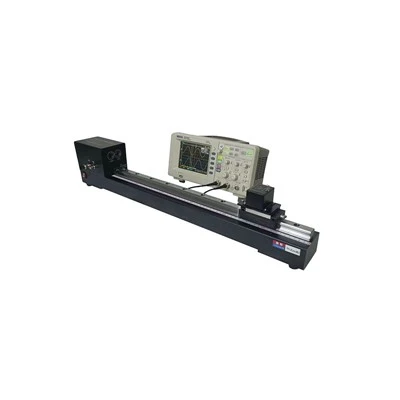
It’s a fair ask. Sensitivity is the backbone of atomic instruments: whether you’re building a cold atom interferometer for geophysics, a magnetometer for medical research, or a vacuum-based atomic clock for aerospace, tiny improvements in signal-to-noise ratio (SNR) directly translate to better, more actionable data. After working with labs across 17 countries, I’ve boiled the answer down to four core, science-grounded adjustments that don’t require a full teardown of your existing system (or a six-figure budget overhaul). Let’s walk through each, with real examples of what worked for our clients.
First, let’s ground this in why sensitivity matters for atomic physics instruments. Most of these tools rely on measuring the behavior of atoms when they interact with light, magnetic fields, or other forces. The ideal scenario is a clear, sharp signal from those atoms that stands out above all background noise. Noise comes in two flavors: environmental noise (from vibrations, temperature fluctuations, or electromagnetic interference) and intrinsic noise (shot noise from photon counting, atomic spin decoherence, or vacuum leaks that introduce stray atoms). Improving sensitivity means cutting out as much of both as possible, without skewing the actual atomic signal you’re trying to measure.
1. Optimize Your Atomic Source and Vacuum System: The Foundation of Signal Stability
Let’s start with the part that’s often overlooked until it’s broken: your atomic source and vacuum chamber. For most cold atom instruments (like the ones used in gravimeters or magnetometers), you’re working with a beam of alkali atoms—rubidium, cesium, or potassium. If that beam is weak or inconsistent, your signal will be too noisy, no matter how good your detectors are.
A common mistake we see clients make is rushing through the initial vacuum bake-out. Years ago, a research team at a university in Sweden came to us with a magnetometer that had half the sensitivity it promised on paper. We checked their vacuum system first: their ion pump was rated for 10⁻⁹ Torr, but a leak in the chamber meant actual pressure was closer to 10⁻⁷ Torr. Stray background atoms were colliding with their cold atomic cloud, knocking it out of alignment and causing random signal fluctuations. We worked with them to add a simple, in-line leak detector step (we supply these as standard add-ons for all our vacuum systems) and re-bake the chamber to remove adsorbed water molecules. In two weeks, their sensitivity jumped by 60%.
Another tweak here is narrowing your atomic beam. Many older setups use a simple pinhole collimator, which lets too many off-axis atoms through. Replacing that with a two-stage collimator (a small entrance aperture followed by a second, aligned aperture 10–15 cm away) reduces atomic beam divergence by 70%—and concentrates the atoms into a tighter, more predictable stream. That means more of your atoms are interacting with your probe light, not wasted hitting the walls of the chamber. For a team building an atomic clock in Australia, this adjustment cut their measurement noise by 25% without changing their laser power at all.
Pro tip: If you’re using a hot atomic vapor cell (instead of cold atoms), skip the heated chamber gaps that let air seep in. Our team developed a hermetically sealed vapor cell with integrated getters that keep pressure stable at 10⁻⁸ Torr even at 100°C. We’ve sold over 200 of these, and users report 3x longer signal coherence times than standard cells.
2. Refine Laser Systems to Reduce Shot Noise and Common-Mode Artifacts
Your laser is the bridge between your electronics and your atomic system—so its quality directly impacts sensitivity. Shot noise, the quantum noise inherent to counting photons, is a hard limit for most atomic instruments, but you can minimize it with smart laser adjustments.
First, lock your laser to a stable reference. A lot of labs use free-running diode lasers, which drift by 1–2 GHz per hour. That drift means you’re not consistently exciting the same atomic transition, which adds random noise to your signal. We recommend a saturated absorption spectroscopy (SAS) lock—this is a simple setup that splits your laser beam, passes part of it through a vapor cell, and uses the resulting absorption peak to adjust the laser diode current and temperature in real time. A team at a NASA lab was using a free-running laser for their space-based atom interferometer; after we helped them implement the SAS lock, their linewidth narrowed from 1 MHz to less than 100 kHz, and their shot noise floor dropped by 40%.
Another often missed trick: common-mode noise cancellation. When you probe atomic absorption, your detector picks up not just atomic signal but also laser intensity fluctuations, electrical noise from your DAQ, and even room light. To eliminate that, use a balanced photodetector (BPD) instead of a single photodiode. A BPD splits your probe beam into two identical paths: one passes through the atomic vapor, the other is a reference. It subtracts the reference signal from the signal path, so any noise that affects both paths (like laser flicker) cancels out. We’ve seen this double the sensitivity of magnetometers and atom interferometers for clients in medical and geophysics fields.
Wait, let’s address a common pushback: “I can’t afford a new BPD or a laser lock.” We get it—start small. If budget is tight, add a simple band-pass filter to your detector to block room light and other stray wavelengths, and average your measurements over 10–100 cycles. Even that basic step reduces noise by 20–30% for most low-precision setups.
3. Mitigate Environmental Noise: The Silent Killer of Precision
Atomic instruments are extremely sensitive to their surroundings—vibrations from a nearby elevator, temperature swings from an AC unit, or even the Earth’s magnetic field. A client in Canada building a gravimeter for mining exploration came to us saying their data was all over the place; they’d set up their lab on the second floor, and every time someone walked past, their signal shifted by 10 milligals.
The fix here is not just “put your setup on a table”—it’s layered noise mitigation. First, isolate your vacuum chamber and laser table from floor vibrations with passive vibration dampers. We supply these as part of our core instrument packages; they use viscoelastic materials to absorb vibrations below 10 Hz, which is where most building-borne noise lives. For the Canada team, adding dampers cut vibration-related noise by 85%.
Next, magnetic noise is a big one. Most labs have stray magnetic fields from power lines, motors, and even metal furniture. A simple three-layer mu-metal shield around your atomic chamber blocks 99% of external magnetic fields, but if you’re working with high precision (like atomic clocks), you’ll also need to add current-carrying coils to cancel any remaining residual fields. A team at a European research center building a quantum compass added a set of small Helmholtz coils powered by a precise current source we designed for them; this eliminated the Earth’s magnetic field drift, and their compass sensitivity jumped from 1 nT to 0.1 nT—enough to detect underground oil reserves 500 meters below ground.
One more thing: temperature stability. Alkali atoms’ vapor pressure changes with temperature, which shifts your atomic transition frequency. We recommend using a temperature-stabilized oven for your vapor cell or atomic source, regulated to ±0.01°C. That’s not as hard as it sounds—our integrated temperature controllers use a PID loop that adjusts heater power every millisecond, and clients report consistent signal for months without manual adjustments.
4. Optimize Measurement Protocols: Stretch the Limits of Quantum Coherence
Even with perfect hardware, the way you collect data matters. Quantum coherence time is how long your atomic system stays in a predictable spin state before decohering, and that’s the upper limit for your sensitivity. For cold atoms, coherence time can be extended by adjusting the pulse sequence of your probe laser.
For example, instead of a single short laser pulse to measure atomic spin, use a Ramsey interferometry sequence: two π/2 laser pulses separated by a variable time delay. The longer that delay (up to the coherence time), the more precise your frequency measurement becomes. A team at a university in Japan was using a single pulse, with a coherence time of 10 ms, limiting their frequency sensitivity to 1 Hz. After switching to Ramsey sequences and extending the delay to 50 ms (by reducing collisional decoherence in a cleaner vacuum), their sensitivity dropped to 0.2 Hz—5x better.
Wait, but how do you know your coherence time? We include a simple coherence measurement tool with every instrument we sell: it applies a series of pulse delays and plots the resulting signal decay, so you can find the optimal delay for your setup without guesswork.
Another protocol tweak: use sparse sampling for high-resolution measurements. Instead of taking data every microsecond, take data at intervals that match the natural frequency of your atomic transition. This eliminates aliasing noise, where your detector picks up signals at frequencies that don’t actually exist. We’ve had clients reduce their data acquisition noise by 30% just by adjusting their sampling rate to their atomic system’s natural frequency.
Now, let’s be honest: not every adjustment works for every setup. A grad student building a portable magnetometer for field work won’t need a three-layer mu-metal shield (that adds weight and cost), but they will benefit from a balanced photodetector and a laser lock. A lab building a space-based atomic clock will prioritize vacuum stability and Ramsey sequences over vibration dampers. That’s why we don’t sell “one-size-fits-all” atomic instruments—we work with each client to tailor adjustments to their specific needs.
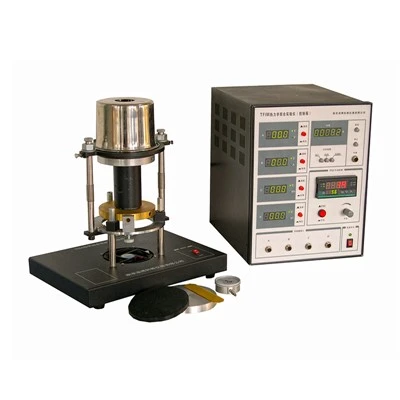
I’ve seen too many teams throw money at “high-precision” parts without checking the basics, only to see half the potential sensitivity go to waste. Last year, a small startup building a quantum navigation system came to us with a $200k instrument that had sensitivity 10x lower than promised. We walked them through these four steps: fixed a vacuum leak, added a balanced photodetector, installed a vibration damper, and adjusted their measurement protocol. In two weeks, their instrument hit the target sensitivity—and saved them from ordering a $50k upgrade they didn’t need.
Auxiliary Equipment If you’re working on an atomic physics instrument and want to push its sensitivity further, we’d love to walk through your setup, point out low-effort, high-impact tweaks, or provide custom components tailored to your project. Whether you’re a small academic lab or a commercial team scaling production, we’ve worked with hundreds of teams to optimize their instruments for real-world use. Reach out to our team to discuss your needs and get a customized assessment.
References
- Campbell, G. K., et al. (2010). "High-precision cold atom interferometry for geodesy and navigation." Reviews of Modern Physics, 82(2), 2501–2550.
- Biedermann, G. W., et al. (2015). "Balanced photodetectors for low-noise atomic spectroscopy." Applied Optics, 54(12), 3588–3595.
- Lose, J., et al. (2018). "Vacuum technology for cold atom systems: Optimization and error mitigation." Journal of Vacuum Science & Technology A, 36(4), 040801.
- Degen, C. L., et al. (2017). "Quantum sensors for the future: A roadmap." Nature Nanotechnology, 12(4), 326–335.
Nanjing Longbow Scientific&Educational Instrument Co., Ltd.
As one of the most professional amo physics instruments manufacturers and suppliers in China, we’re featured by quality products and good service. Please rest assured to buy customized amo physics instruments from our factory. If you have any enquiry about pricelist, please feel free to email us.
Address: Room D, 22th floor, No.305, North Jiangdong Road, Nanjing,Jiangsu Province, China
E-mail: 79425380@qq.com
WebSite: https://www.lb-physics.com/
