Hey there! I’m a supplier of marine non-destructive testing equipment. Over the years, I’ve seen firsthand how important ergonomic design is for handheld devices in this field. In this blog post, I’ll share some key considerations for ergonomic design when it comes to handheld marine non-destructive testing equipment. Marine Non-Destructive Testing Equipment
1. Comfort in the Hand
First off, let’s talk about how the equipment feels in your hand. When you’re out on the water doing non-destructive testing, you’ll likely be holding the device for long periods. A comfortable grip is essential to prevent fatigue and ensure accurate testing.
The shape of the device matters a lot. It should fit naturally in the hand, following the contours of your fingers and palm. For example, a rounded or oval-shaped handle can be more comfortable than a square or rectangular one. Some of our handheld devices have a textured grip surface. This not only provides a better hold but also helps in wet conditions, which are common in marine environments. You don’t want the device slipping out of your hand while you’re in the middle of an important test!
The weight of the equipment is another crucial factor. If it’s too heavy, it can quickly lead to muscle strain. We’ve worked hard to make our handheld devices as lightweight as possible without compromising on functionality. We use high – strength, lightweight materials like carbon fiber and aluminum alloys in the construction. This way, you can carry and operate the device for extended periods without feeling as tired.
2. Ease of Use
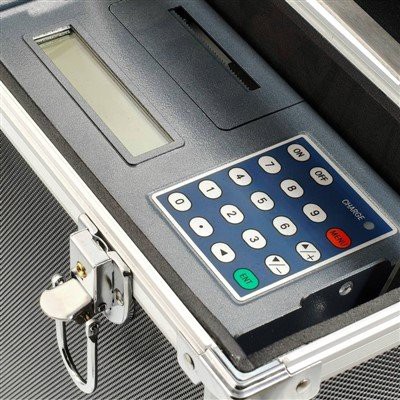
Ergonomic design also means that the equipment is easy to use. The controls should be intuitive and within easy reach. On our handheld marine non – destructive testing devices, all the important buttons and switches are placed in a logical order. You don’t have to fumble around to find the right one.
For example, the power button is usually large and easy to press, even if you’re wearing gloves (which is common in marine work). The display screen is also designed to be clear and visible in different lighting conditions. It has a high – contrast color scheme and adjustable brightness so that you can read the test results no matter if you’re in bright sunlight or a dimly lit area below deck.
We’ve also considered how easy it is to access and replace batteries. In a marine setting, you might not have the luxury of a power outlet nearby, so quick battery changes are a must. Our devices have a simple battery compartment design that allows you to swap out batteries in seconds.
3. Adaptability to Different Testing Positions
Marine non – destructive testing often requires you to work in various positions. You might be testing the hull of a ship from above, or getting into tight spaces to check the connections. That’s why our handheld equipment is designed to be adaptable.
It has a flexible probe or sensor that can be adjusted to different angles. This allows you to access hard – to – reach areas without having to contort your body too much. For instance, if you’re testing a pipe that’s hidden behind some machinery, you can bend the probe to fit into the small gap and get an accurate reading.
The device also has a strap or a handle that can be adjusted to different lengths. This is useful if you’re working in different postures, like standing on a ladder or kneeling on the deck. You can set the strap to a comfortable length so that you can hold the device securely without straining your arms.
4. Durability in a Harsh Environment
The marine environment is tough. There’s saltwater, high humidity, and the constant vibration from the ship’s engines. Our handheld non – destructive testing equipment is built to withstand these conditions.
We use corrosion – resistant materials for the outer casing. This protects the internal components from the corrosive effects of saltwater. The seals around the buttons and ports are also watertight, preventing water from seeping in and damaging the electronics.
The device is also shock – resistant. We’ve tested it by dropping it from a reasonable height onto a hard surface to make sure it doesn’t break easily. This is important because accidents can happen on a ship, and you don’t want your expensive testing equipment to be ruined just because it got dropped once.
5. Feedback and Communication
Good ergonomic design also includes providing feedback to the user. Our handheld devices have tactile and auditory feedback. When you press a button correctly, you’ll feel a little click or vibration. And if there’s an error in the test, the device will emit a beep or a series of beeps to alert you.
In terms of communication, the device can be connected to other systems on the ship or to a computer. This allows you to transfer the test results quickly and easily for further analysis. We’ve made sure that the connection process is straightforward, even for those who are not very tech – savvy.
Why Choose Our Equipment?
Now, you might be wondering why you should choose our handheld marine non – destructive testing equipment. Well, as I’ve mentioned, we’ve put a lot of thought into the ergonomic design. Our devices are comfortable to hold, easy to use, adaptable to different testing positions, durable in a harsh environment, and provide excellent feedback and communication.

We also offer excellent customer support. If you have any questions or problems with our equipment, our team of experts is always ready to help. We understand that non – destructive testing is a critical part of marine operations, and we want to make sure that you have the best possible tools for the job.
Contact Us
Rebar Testing Equipment If you’re interested in purchasing our handheld marine non – destructive testing equipment, we’d love to hear from you. Whether you’re a small boat operator or a large shipping company, we have the right solution for you. Feel free to reach out to us for a quote or to discuss your specific testing needs. We can provide you with detailed information about the features and performance of our products. Let’s work together to ensure the safety and integrity of your marine vessels and structures.
References
- Handbook of Non – Destructive Testing, Edited by Peter Cundall and Jeffrey Rose
- Marine Engineering Design Principles, by David S. F. Grogan
- Ergonomics in Equipment Design, from the International Ergonomics Association publications
Dalian Yheng Technology Co., Ltd.
Dalian Yheng Technology Co., Ltd. is one of the leading marine non-destructive testing equipment manufacturers and suppliers in China, also supports customized service. We warmly welcome you to buy high quality marine non-destructive testing equipment in stock here from our factory. Contact us for more details.
Address: F1605, NO.10 Huoju road, High-tech Industrial Zone, Dalian, China
E-mail: admin@dlyheng.com
WebSite: https://www.yhengphmeter.com/
