Hey there! As a supplier of terrain models, I’ve been in the game for quite a while. One question I get asked a lot is how to improve the smoothness of a terrain model. Well, I’m here to share some tips and tricks that I’ve picked up along the way. Terrain Model
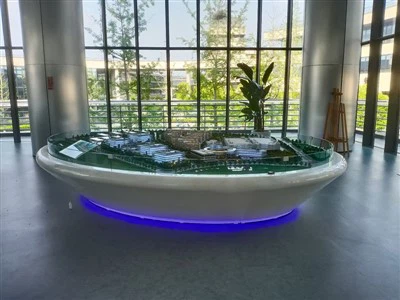
First off, let’s talk about why smoothness matters. A smooth terrain model can make a huge difference in how it looks and functions. Whether you’re using it for a presentation, a simulation, or just for display, a smooth surface gives a more professional and polished appearance. It also helps with accuracy, especially when you’re dealing with things like elevation data or landforms.
1. Start with High – Quality Data
The foundation of a smooth terrain model is high – quality data. You can’t expect a smooth model if your initial data is full of errors or inaccuracies. When I source data for my terrain models, I look for reliable sources. For example, government – issued topographic maps are a great starting point. They usually have detailed elevation information that’s been surveyed and verified.
Another option is LiDAR (Light Detection and Ranging) data. LiDAR uses laser technology to measure distances and create highly accurate 3D models of the terrain. This data can be incredibly detailed, which is great for getting a smooth and realistic model. But it can also be quite expensive, so you need to weigh the cost against the benefits.
Once you have your data, it’s important to clean it up. Remove any outliers or incorrect values. Sometimes, the data might have spikes or dips that don’t represent the real terrain. You can use software tools to identify and correct these issues. For example, some GIS (Geographic Information System) software has built – in functions for data cleaning.
2. Choose the Right Modeling Software
The software you use to create your terrain model can have a big impact on its smoothness. There are a lot of options out there, but not all of them are created equal.
For starters, I recommend using software that has good interpolation capabilities. Interpolation is the process of estimating values between known data points. A good interpolation algorithm can fill in the gaps in your data and create a smoother surface.
One popular software is Blender. It’s free and open – source, and it has a lot of features for 3D modeling, including terrain generation. Blender allows you to import your data and use different tools to manipulate and smooth the terrain. You can adjust the resolution, apply smoothing filters, and even add textures to make the model look more realistic.
Another option is ArcGIS. It’s a more professional – grade GIS software that’s widely used in the industry. ArcGIS has powerful tools for terrain analysis and modeling. It can handle large datasets and has advanced interpolation methods. However, it can be a bit expensive and has a steeper learning curve.
3. Adjust the Resolution
The resolution of your terrain model is crucial for smoothness. A low – resolution model might look blocky and jagged, while a high – resolution model can be very smooth but might also take a long time to process and require a lot of storage space.
When you’re creating your model, you need to find the right balance. If you’re working on a large – scale project, you might be able to get away with a lower resolution. But if you’re focusing on a small area or need a lot of detail, a higher resolution is better.
You can adjust the resolution in your modeling software. Most software allows you to set the cell size or the number of data points per unit area. Experiment with different settings to see what works best for your project.
4. Apply Smoothing Filters
Smoothing filters are a great way to improve the smoothness of your terrain model. These filters work by reducing the sharp edges and irregularities in the surface.
There are different types of smoothing filters available. One common type is the Gaussian filter. It works by averaging the values of neighboring data points. This helps to reduce noise and create a smoother surface.
Another type is the median filter. It replaces each data point with the median value of its neighboring points. This can be effective in removing outliers and creating a more uniform surface.
Most modeling software has built – in smoothing filters. You can usually adjust the parameters of the filter, such as the radius or the strength. Play around with these settings to get the desired level of smoothness.
5. Add Textures and Shading
Textures and shading can also enhance the smoothness of your terrain model. A well – applied texture can make the surface look more natural and less blocky.
When choosing textures, look for ones that match the type of terrain you’re modeling. For example, if you’re creating a mountainous terrain, you might want to use a rocky or grassy texture. You can find a lot of free and paid textures online.
Shading is another important aspect. You can use lighting effects to create highlights and shadows on the terrain. This gives the model a more three – dimensional look and can make it appear smoother. Most 3D modeling software has tools for adjusting lighting and shading.
6. Quality Control and Testing
Once you’ve created your terrain model, it’s important to do some quality control and testing. Check for any remaining rough spots or irregularities. You can do this by visually inspecting the model from different angles.
You can also use software tools to analyze the smoothness of the model. Some software can calculate the surface roughness or the curvature of the terrain. This can help you identify areas that need further improvement.
If you find any issues, go back and make the necessary adjustments. You might need to re – run the smoothing filters or adjust the resolution.
7. Collaboration and Feedback
Don’t be afraid to get feedback from others. If you’re working on a project for a client, involve them in the process. They might have specific requirements or preferences for the smoothness of the terrain model.
You can also collaborate with other professionals in the field. Share your model with them and ask for their opinions. They might have some tips or tricks that you haven’t thought of.
In conclusion, improving the smoothness of a terrain model takes a combination of high – quality data, the right software, and some careful adjustments. By following these tips, you can create a terrain model that looks great and functions well.

If you’re in the market for a terrain model or have any questions about improving smoothness, I’d love to chat. Whether you’re a researcher, a designer, or just someone interested in terrain modeling, I can provide you with the expertise and the models you need. Reach out to me, and let’s start a conversation about your project.
Terrain Model References
- ESRI. (n.d.). ArcGIS Documentation.
- Blender Foundation. (n.d.). Blender Manual.
- Various government topographic map agencies for data sourcing information.
Guangzhou Zonco Culture and Media Co., Ltd.
Guangzhou Zonco Culture and Media Co., Ltd. is one of the most reliable terrain model manufacturers and suppliers in China, also supports customized service with low price. We warmly welcome you to wholesale cheap terrain model from our factory. For quotation, contact us now.
Address: Room C371, 402, Building 6, No.3 Xintang Street, Tianhe District, Guangzhou
E-mail: 13123180052@163.com
WebSite: https://www.scalemodellab.com/
